The Digital Dark Side…

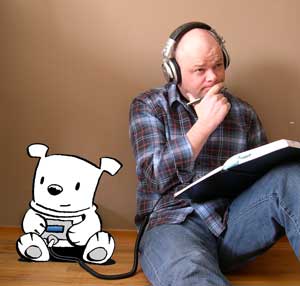
After much hemming and hawing I decided to take the plunge. For just over a month now I have been the owner of a new Wacom Cintiq 21UX.

I’ve always drawn my comics old school, with a pen and ink. In fact it’s one of my favorite parts of creating a comic. However, after attending a fantastic Sketchbook event, where I actually had the opportunity to test drive one, the idea of going digital started to appeal to me. Pretty much all of my workflow is digital. Comics are scanned into a computer, corrected, adjusted, text might be added and then colored. I started to notice that, even though I liked to have an original inked comic, I no longer thought of it as the finished artwork. What I mean by that is, I would ink a comic and fully expect to alter it later in Photoshop. For example, if a character was drawn a little too far to the left in a panel, instead of erasing and redrawing the character I would ink it and adjust it in Photoshop later. Sometimes whole panels would be rearranged when a better idea came to me. There are a lot of changes that take place as a comic is developed.

Also an important consideration is time. I’m drawing a daily comic strip 365 days a year…no breaks. Those deadlines happen every single week. So to get a week off you have to be an extra week ahead (for me, an amazingly hard thing to do!) Anything that can speed up your workflow is fantastic. This is an especially important point in this day and age of newspaper comics. Many cartoonists are starting second strips or doing extra illustrations/projects just to make up their loss in income from struggling newspaper sales. Besides income, extra time means a chance to be more creative and experiment….which can only benefit all of the comics you draw.

So how has the last month of transitioning to the digital dark side gone, you ask?

In some ways it feels like when I let go of buying CDs and downloaded my music online. Not having the physical drawing seemed odd. Also, your field of vision is different when you draw on paper as opposed to sketching on a screen. I find it much easier to to quickly layout a sheet of bristol board than panels on the display. Of course each approach has it’s advantages and disadvantages. Mistakes on the paper require erasing or fixing digitally in Photoshop later. On screen, all those design decisions are made on the fly so your sketch is pretty close to your final inked drawing which saves tons of time. Another thing that became quickly apparent was the freedom to try out new things. Because whatever you draw can be quickly undone and no paper is wasted or drawing wrecked you can experiment with different angles and expressions etc. It felt a bit like it took the anxiety out of inking….as I discovered when I went back to inking the traditional way. I had a line go off badly and I reached for the “Control Z” keys (amazing how quickly that mindset had taken hold!)

But like all things, you gain some and you lose some. The digital pen nib doesn’t flex and bounce like a real pen nib. Sometimes you get a really terrific unexpected line just by the steel flexing in the pen and the pressure of your hand. Sometimes the unexpectedness of drawing with real ink is what makes the process so much fun. Sometimes there’s disaster (dragging your knuckles through a wet drawing) but often there’s an energy to the lines that is hard to replicate.

So….hard to say which technique is better…maybe neither is. I guess it depends on which tools works best for each artist. After an awkward adjustment period, I’ve now done a couple of weeks of comics 100% digitally. Already I can see things that aren’t quite the way I’d like them so more tinkering with tools and settings are needed. However, I’m surprised to find that for me, inking digitally is just as exciting as inking the old way. Sure it’s a bit different but it’s still the part of the process where the comic really springs to life. Also, I kind of feel like I have more freedom now to to get better at drawing. Like I said, there’s no paper to waste so you can just see what happens….ironically, I think this can only benefit my traditional work as well. As for being faster, I can begin to see that as well. Fellow cartoonists have told me to expect the learning curve to last about a month and that’s pretty much spot on. One thing I’m glad I invested in was a pair of Gunnar computer glasses. Staring at a screen for hours was one thing that worried me about the Cintiq. Inking (for me) is an intense process so I knew I would be focusing hard on the screen just as I do with paper. The glasses really make a huge difference as far as dryness and fatigue…I highly recommend them.

The digital strips should appear in June some time…it’ll be interesting to see if anyone notices the change!

Mr. Media Video Interview!

Last week I was lucky enough to be interviewed by the one and only Bob Andelman A.K.A. Mr. Media!

Even though I was a bit sleep deprived (my dog had me up several times the night before) we talk about comics, robots and I even do some on the spot drawing! Gourdie Gourd, an old cartoon character I created…way-way-way back…even makes an appearance. To top off a really fun interview the intro features Paul Michael Glaser from the classic TV show Starsky & Hutch! (the 10 year old me is busting!)

Click here to watch the interview and be sure to check out the hundreds of other great Mr. Media interviews. He has a special cartoonist section and the recent one with Bill Griffith of Zippy The Pinhead fame is really fun.